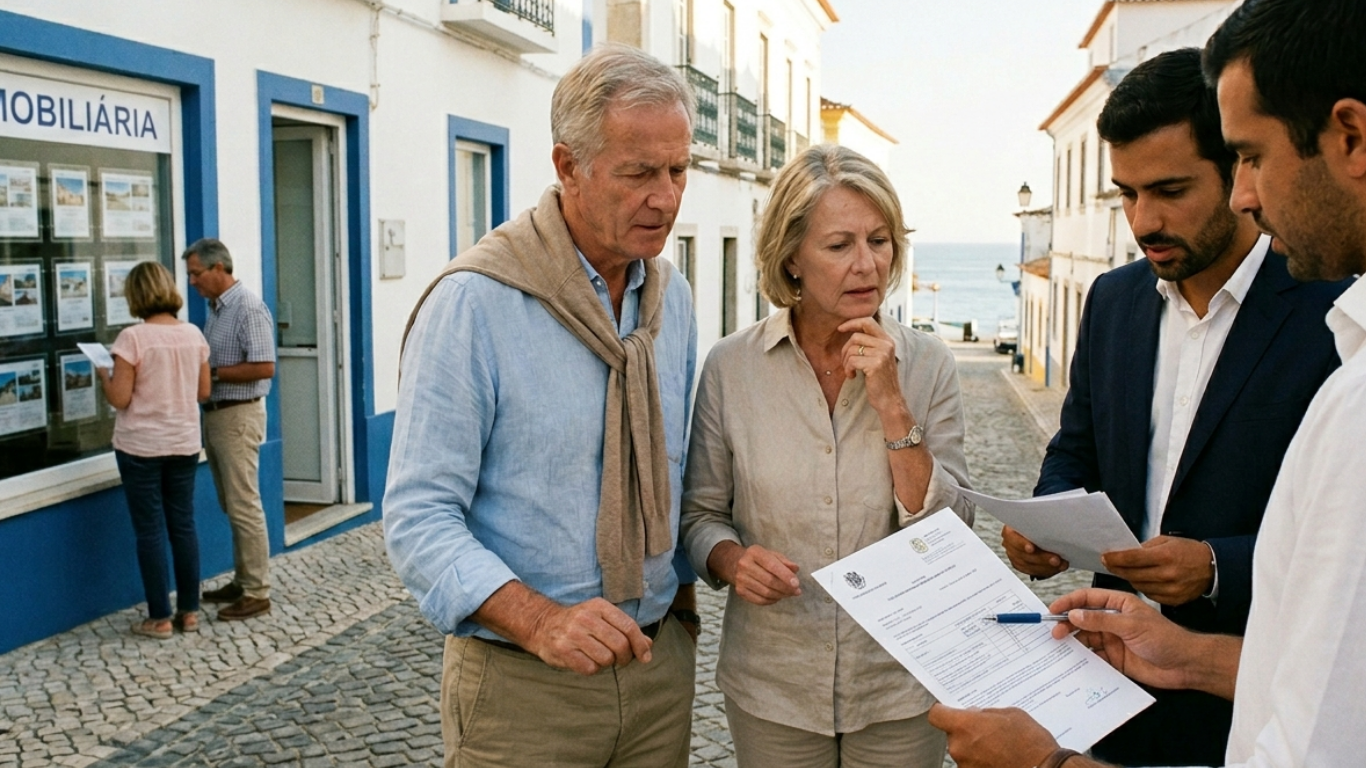

Find out everything about buying property in Portugal with our ultimate guide. Learn about the process, costs, legal requirements and the best locations for foreign buyers in 2025.
Portugal has become one of Europe’s most sought-after destinations for international property buyers, thanks to its stunning landscapes, rich culture, favourable climate, and competitive prices. Whether you’re looking for a holiday home, investment property or planning to relocate permanently, buying property in Portugal is a great opportunity for smart investors and relaxed-lifestyle-seekers alike.

Why Portugal for your property investment?
The reason to buying property in Portugal range beyond its famous beaches and historic cities. The country is politically stable, has a growing economy, and a welcoming attitude towards foreign investment. Portugal’s Golden Visa has attracted thousands of international buyers, and the Non-Habitual Resident (NHR) tax regime grants significant tax benefits to new residents.
Additionally, the Portuguese property market has demonstrated remarkable resilience and growth in recent years. Lisbon and Porto have experienced significant price growth, while the Algarve continues to attract buyers seeking a laid-back lifestyle and rental income. The variety of properties ranges from modern apartments in city centres to traditional quintas in the countryside and luxury villas overlooking the Atlantic.
Understanding the portuguese property market
When purchasing property in Portugal, it is essential to understand the local market. For starters, it’s important to note that the country’s real estate sector has benefited from foreign investment, tourism growth, and urban regeneration. Lisbon and Porto lead in terms of price growth and rental yields, while the Algarve is popular for holiday homes and retirement properties.
Prices vary significantly depending on location, with prime areas in Lisbon commanding the highest prices and rural areas offering excellent value. The market has experienced strong growth in the luxury segment, driven by international buyers seeking high-end properties in prime locations.
Recent infrastructure developments, including improved transportation links and urban renewal projects, have created new opportunities for property buyers, and areas that were previously overlooked are now gaining interest and value.
The legal process of buying property in Portugal
The legal framework for purchasing property in Portugal is well-established and foreigner-friendly. Non-EU citizens can purchase property and enjoy the same rights as Portuguese citizens, although some restrictions may apply to agricultural land or properties located in border areas.
- The process starts with getting a Portuguese tax number (NIF), which is mandatory for all property transactions.
- Once you’ve found a property you like, you’ll need to conduct due diligence, verify ownership, check for any encumbrances, and ensure that all necessary licenses and permits are in place.
- A promissory contract (contrato de promessa de compra e venda) is signed first, accompanied by a deposit of 10% to 30% of the purchase price. This contract sets out the terms of the sale and provides legal protection for both parties.
- The final deed (escritura) is signed in the presence of a notary, thereby completing the transfer of ownership.
Costs and taxes when buying property in Portugal
Understanding the full cost structure is key when buying property in Portugal. Beyond the purchase price, you should budget for various taxes and fees that can add 6-8% to the total cost.
Property transfer tax (IMT) is the main tax obligation, calculated on a sliding scale based on the property value and intended use. Urban properties used as primary residences benefit from lower rates and exemptions, while luxury properties and those intended for investment purposes face higher rates.
Stamp duty (imposto de selo) is 0.8% of the property value, while notary and registration fees can range between €500 and €1,000. Legal fees for a Portuguese lawyer are €1,500-€3,000, depending on the complexity of the transaction.
Annual property tax (IMI) is 0.3% to 0.45% for urban properties, making Portugal a great long-term property ownership destination compared to many other European countries.
Financing options for foreign buyers
Portuguese banks do lend to foreign buyers, although the requirements have become stricter since the implementation of European banking regulations. Non-residents can gain a mortgage of up to 70-80% of the property value, depending on their financial profile and the type of property.
Interest rates are competitive, with options of fixed and variable rates. Banks require proof of income, and employment stability and may ask for additional guarantors for non-resident borrowers. The mortgage approval process typically takes 4-6 weeks, so it’s recommended that buyers obtain a mortgage pre-approval before making firm purchase commitments.
Alternative financing options are available via international mortgage brokers who specialise in Portuguese property purchases, offering tailored solutions for different buyer profiles and circumstances.
Where to buy property in Portugal
Portugal has many regions to choose from, ranging from large cities to small coastal towns, each with its own benefits for investors and seekers of certain lifestyles.
Lisbon: Investment and urban lifestyle
Lisbon is Portugal’s capital and the country’s most active property market. It yields great returns on rentals and offers long-term capital growth. Historic areas like Chiado and Bairro Alto are great for high-end buyers, while up-and-coming areas like Marvila are gaining attention thanks to their investment potential.
Porto: tradition meets modern living
Portugal’s second-largest-city, Porto, has undergone a significant transformation in recent years, and property values have grown substantially as a result. The city centre is a UNESCO World Heritage site, combining historic charm with modern amenities, making it attractive to investors and those seeking a more traditional Portuguese lifestyle.
The Algarve: A haven for international buyers
The Algarve is the most popular region for international buyers. With its year-round sunshine, world-class golf courses and established rental market, it’s a great lifestyle and investment opportunity. Towns like Lagos, Tavira, and Vilamoura offer different experiences ranging from cosmopolitan resort living to authentic coastal charm.
Silver coast and central Portugal: Affordable coastal living
Central Portugal and the Silver Coast are ideal for buyers looking for value without compromising on quality of life. These regions offer significantly more affordable property options than the Algarve, while still boasting beaches, cultural attractions, and growing expat communities.
Working with professional support
Buying property in Portugal requires professional guidance from local experts. A buyer’s agent can provide market knowledge, property sourcing, negotiation support, and coordinate with both legal and financial professionals on your behalf.
Portuguese real estate agents must be licensed and registered, providing consumer protection and professional standards. However, working with a buyer’s agent who represents your interests ensures that you receive unbiased
advice and comprehensive support throughout the entire purchase process.
Legal representation is highly recommended for all property transactions. Portuguese lawyers specialising in real estate can navigate the complex legal requirements, ensure proper due diligence is carried out, and protect your interests during negotiations and completion.
Conclusion
Buying property in Portugal presents a great opportunity for international buyers seeking a high quality of life, attractive investment potential, and European residency. The countrys politically stable, it is experiencing economic growth, and it has a welcoming attitude towards foreign investment.
Success in the Portuguese property market requires preparation, professional guidance and an understanding of the local market. With proper planning and expert support, buying property in Portugal can give you financial returns and lifestyle benefits for years to come.
If you’d like to talk through what you’re looking for, get in touch. No sales pitch – just an honest conversation about your options.
FAQs
Q1: Can foreigners buy property in Portugal without restrictions?
Yes, non-EU citizens can buy property in Portugal and benefit from the same rights as Portuguese citizens. Some restrictions may apply to agricultural land or properties in sensitive border areas, but residential and commercial properties are freely available to international buyers.
Q2: How long does it take to buy property in Portugal?
The process typically takes 6-12 weeks from when an offer is accepted to completion. This includes due diligence, mortgage approval (if required), contract drafting, and final deed signing. More complex transactions or those requiring planning permissions may take longer.
Q3: What are the ongoing costs of owning property in Portugal?
Annual property tax (IMI) is 0.3-0.45% of the property’s rateable value. Additional costs include building insurance, maintenance fees for apartments, utilities, and local waste collection charges. These ongoing costs are generally lower than many other European countries.
Q4: Do I need a Portuguese bank account to buy property?
While not mandatory, having a Portuguese bank account makes the buying process and ongoing property ownership much simpler. Banks require a Portuguese tax number (NIF) to open accounts, and local accounts facilitate payments for utilities, taxes, and other property expenses.
Q5: Can I get residency in Portugal by buying property?
Portugal’s Golden Visa programme grants residency for property investors who buy real estate worth at least €500,000 (or €400,000 in designated regeneration areas). This programme provides a path to permanent residency and citizenship, though specific requirements must be met and the investment maintained.