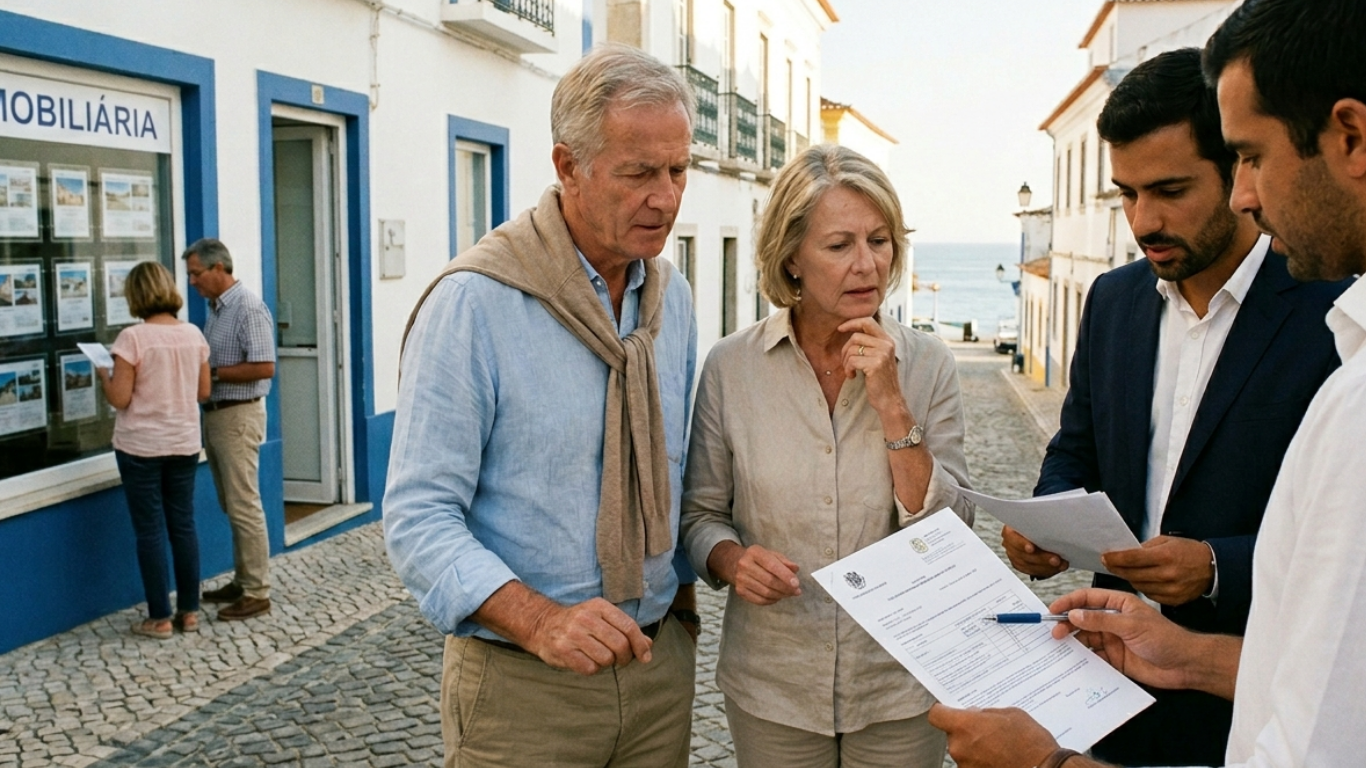

A Practical Guide for US Citizens
More Americans are buying property in Portugal than at any point in the last decade, and many are now asking how to buy a property in Portugal. Some want to relocate permanently. Some are planning for retirement. Others see it as a smart place to park money in a stable European market while enjoying 300 days of sunshine a year.
Whatever’s driving the move, Portugal ticks a lot of boxes. It’s one of the safest countries in Europe according to the Global Peace Index. Healthcare is solid, both public and private. The Algarve, Lisbon, and Porto are well connected, culturally rich, and increasingly international. And for Americans comparing property prices to what they’d pay in California, Massachusetts, or New York, the value is striking.
But here’s the part that catches people off guard. The way you buy property in Portugal is nothing like what you’re used to back home. The rules are different, the roles are different, and the protections you take for granted in the US simply don’t exist here. If you go in assuming it works the same way, you’re going to have problems.
This guide walks you through how to buy a property in Portugal as a US citizen, step by step, with the kind of honest, practical detail we wish someone had given us when we first moved here.
The biggest difference: nobody is working for you
If you’ve bought property in the US, you’re used to having your own agent. Someone with a legal duty to represent your interests, negotiate for you, and tell you about anything that could affect your decision. You’re used to centralised MLS systems where pricing is transparent. You know exactly who represents whom.
Portugal doesn’t work that way.
Here, almost every real estate agent represents the seller. They’re paid by the seller. Their job is to get the highest price possible for the seller. There’s no MLS. Pricing is opaque. The same property can appear on five different websites at five different prices. And the agent showing you around a villa with a sea view? They’re working for the person selling it, not for you.
This isn’t a criticism. It’s just how the Portuguese market operates. But for American buyers who assume they have the same protections they’d have at home, it can be a rude awakening. We’ve seen it happen more times than we can count.
What this means in practice: you might only be shown properties from one agency’s portfolio, not the whole market. Pricing “guidance” might be based on asking prices rather than what things actually sell for. And nobody is obligated to point out problems with a property unless you’ve hired someone whose job it is to do exactly that.
Before you start looking at properties
Most buyers want to jump straight to browsing listings. We get it. It’s the fun part. But skipping the groundwork is how people end up overpaying, buying in the wrong location, or tangled in legal problems that were completely avoidable.
Here’s what to sort out first.
Get clear on what you actually want
This sounds obvious, but you’d be surprised how many buyers start viewing properties before they’ve properly thought through the basics. Are you relocating full time, or is this a holiday home? Are you buying for lifestyle or investment? What’s your realistic budget once you factor in taxes and closing costs (which typically run 6 to 8% of the purchase price)?
And crucially: do you know the area? Portugal’s property markets are intensely local. Two towns 20 minutes apart can have completely different planning rules, seasonal dynamics, and price trajectories. The Algarve alone covers everything from busy resort towns to quiet rural villages, and the lifestyle in each is dramatically different. We always tell clients to spend proper time in Portugal before committing. Not a long weekend at a resort. Weeks, if you can. Visit in winter. Eat where the locals eat. See what the town looks like when the tourists go home.
Get a NIF and open a bank account
You can’t buy property in Portugal without a NIF (Número de Identificação Fiscal), your Portuguese tax number. You’ll also need a local bank account for the transaction, though in some cases this can wait until after completion. Both are straightforward to set up, but they take time, especially the bank account. Start early.
For a full breakdown of the path to residency and the administrative steps involved, we’ve put together a dedicated guide.
Talk to a mortgage broker (if you’re financing)
Many American buyers pay cash, but Portuguese banks do lend to non-residents. The terms are different from what you’re used to, though. Expect loan-to-value ratios around 60 to 70% for non-residents, according to Banco de Portugal’s lending guidelines. The bank will assess both you and the property independently, and US credit reports don’t transfer directly, so the process takes longer than you’d expect.
Getting pre-approved early does two things. It tells you exactly what you can afford, and it shows sellers you’re serious. It also forces you to coordinate your mortgage timeline with your legal checks and contract deadlines, which is critical. If those timelines don’t line up, you can find yourself legally committed to a purchase without confirmed financing. That’s a position nobody wants to be in.
We’ve written a separate, detailed guide on getting a mortgage in Portugal that covers rates, documentation, and the differences from the US system.
How the property search actually works
Forget Zillow. Forget Redfin. In Portugal, listings are scattered across dozens of platforms and agency websites. The same property might appear at different prices listed by different agents, and there’s no reliable way to know which price is accurate without doing your own research. Some listings stay online long after the property has sold. Others never appear online at all.
A proper search means going well beyond what you can see on the internet. It means contacting multiple agencies, cross-referencing listings, verifying prices, and understanding what comparable properties have actually sold for (not just what they’re asking). In a market with no MLS and no public record of transaction prices, that kind of information doesn’t come from a website. It comes from experience on the ground.
This is one of the biggest areas where the US and Portuguese systems diverge, and one of the main reasons international buyers end up overpaying.
Legal due diligence: this is not optional
In the US, your real estate agent often handles a good chunk of the process. In Portugal, your lawyer is your most important hire.
Before you commit to any purchase, legal checks need to confirm clear ownership and title, correct property registration and boundaries, planning and licensing compliance, and the absence of debts, liens, or charges attached to the property.
One thing that surprises American buyers: notaries in Portugal do not perform due diligence. They witness the signing of the deed, but they don’t check whether the property is legally clean. That’s entirely your responsibility, through your lawyer. And your lawyer should be independent. Not recommended by the seller’s agent. Not connected to the listing agency. Genuinely independent.
We’ve seen transactions where undisclosed debts transferred with the property because the buyer’s lawyer didn’t check thoroughly enough. It’s rare, but it happens, and it’s entirely preventable.
Making an offer and signing the contract
Once you’ve found a property and your legal checks are done, the process moves through several stages.
Reservation agreement. You put down a small deposit (often €5,000 to €10,000) to take the property off the market while contracts are prepared.
Promissory contract (CPCV). This is where it gets serious. You sign a legally binding contract and pay a deposit, typically 10 to 30% of the purchase price. If you pull out after signing, you lose the deposit. If the seller pulls out, they owe you double. The stakes are high, which is exactly why your due diligence needs to be finished before this point, not after.
Final deed (Escritura). The signing happens at a notary. You pay the remaining balance, IMT (property transfer tax) and stamp duty are settled, and ownership transfers to you. For more on how IMT works for non-residents under the new 2026 rules, read our guide to the new IMT flat rate.
If you’re transferring large sums from the US, timing and exchange rates matter. We’ve written about whether you should use a currency specialist and when it makes sense.
The mistakes we see US buyers make
After working with American clients for years, certain patterns come up again and again.
Assuming the agent showing the property represents them. They don’t. In Portugal, they almost always represent the seller. This is the single most important thing for US buyers to understand, and the one most people get wrong.
Skipping independent market analysis. Without an MLS or public transaction data, asking prices can be wildly disconnected from actual market value. Buying based on what’s listed online without checking what things really sell for is how people overpay by tens of thousands of euros.
Underestimating legal and planning risk. Illegal extensions, missing habitation licences, properties built on agricultural land without proper permits. These things exist in Portugal, and they’re not always obvious. A proper legal review catches them. Skipping it doesn’t save money. It costs money.
Rushing the decision. Portugal is gorgeous. The weather is perfect. You’ve had a wonderful week of viewings and you’ve fallen in love with a property. We understand the feeling. But buying a home in another country is not a decision to make on holiday emotions. Come back. Sleep on it. See the property in a different season if you can.
Applying US assumptions to a Portuguese system. Portugal isn’t riskier than the US. It’s just different. The buyers who have the best experience are the ones who take the time to learn how things work here rather than assuming it’s the same as back home.
Do you need a buyer’s agent?
We’re obviously biased here, so we’ll let you decide. But here’s what we’d want you to know.
In the US, buyer representation is standard. In Portugal, it barely exists. Most international buyers either assume the showing agent is their advocate (they’re not) or accept that nobody is working for them and try to figure it out alone. Some manage fine. Others don’t.
What a buyer’s agent gives you is someone who searches the whole market (not just one agency’s portfolio), provides honest assessments of value, negotiates on your behalf rather than the seller’s, and coordinates the legal, financial, and practical elements so nothing falls through the cracks.
That’s what we do. We don’t list properties. We don’t represent sellers. We don’t take commissions from the other side of the deal. We work for you and only for you.
If you’re making a significant purchase in a country you don’t know well, in a system that works very differently from home, having someone in your corner who does this every day can make a real difference to what you pay and what you get.

Ready to talk?
If you’re a US citizen thinking seriously about buying property in Portugal and you want someone on your side from day one, we’d love to have a conversation. No obligation, no sales pitch. Just a proper discussion about what you’re looking for and whether we can help.
Book a free call with us to find out how we work and whether we’re the right fit.
The Buyer’s Agent Portugal